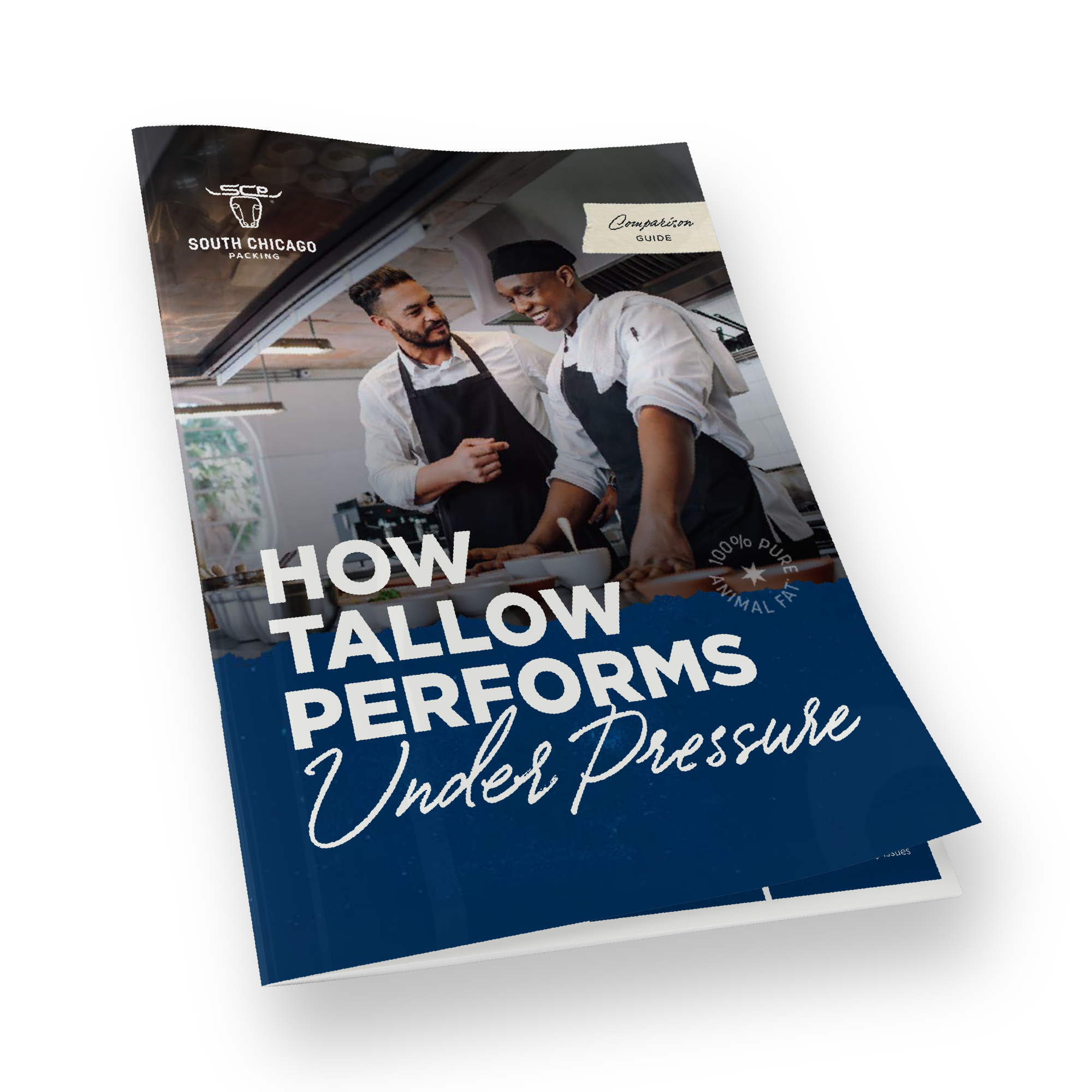
- The Comparison Guide
How Tallow Performs Under Pressure
A Practical Comparison of Animal Fats and Seed Oils in Real-World, High-Volume Fry Environments
Frying oil is one of the most stressed ingredients in foodservice. This guide gives operators a framework to evaluate frying oil the same way they evaluate any other high-impact kitchen input: on data, structure and real-world results.
Before comparing oils, it's worth defining the conditions being evaluated. High-volume frying includes a combination of stressors that compound over time.
A Practical Comparison of Animal Fats and Seed Oils in Real-World, High-Volume Fry Environments
Frying oil is one of the most stressed ingredients in foodservice. This guide gives operators a framework to evaluate frying oil the same way they evaluate any other high-impact kitchen input: on data, structure and real-world results.
Before comparing oils, it's worth defining the conditions being evaluated. High-volume frying includes a combination of stressors that compound over time.
Performance Metrics
Oxidative Stability: How well the oil resists breaking down under heat and oxygen exposure.
Smoke Point Stability: Whether the fat maintains its smoke point over time or degrades.
Fry Life: How many days the oil performs before requiring replacement.
Flavor Profile: How the oil affects the flavors of food cooked in it.
Flavor Stability: Whether the oil maintains neutral or positive flavor contribution over time.
Label Makeup: What ingredients are listed on the frying oil.
Stress Factors
Continuous temperature exposure: 350-375°F, sustained across full service periods.
Filtration frequency: How often the oil is filtered directly impacts its useful life.
Repeated food drops: Each drop lowers oil temperature and introduces moisture, and recovery speed matters.
Carbonization: Food particles left in the oil accelerate breakdown.
Peak service demand: Extended high-volume periods push oil harder and faster.
Extended holds: Oil sitting at temperature without active frying still degrades.
Performance Metrics
Oxidative Stability: How well the oil resists breaking down under heat and oxygen exposure.
Smoke Point Stability: Whether the fat maintains its smoke point over time or degrades.
Fry Life: How many days the oil performs before requiring replacement.
Flavor Profile: How the oil affects the flavors of food cooked in it.
Flavor Stability: Whether the oil maintains neutral or positive flavor contribution over time.
Label Makeup: What ingredients are listed on the frying oil.
Stress Factors
Continuous temperature exposure: 350-375°F, sustained across full service periods.
Filtration frequency: How often the oil is filtered directly impacts its useful life.
Repeated food drops: Each drop lowers oil temperature and introduces moisture, and recovery speed matters.
Carbonization: Food particles left in the oil accelerate breakdown.
Peak service demand: Extended high-volume periods push oil harder and faster.
Extended holds: Oil sitting at temperature without active frying still degrades.
What You'll Find Inside
✓ A Side-by-Side Comparison of Tallow vs. Seed Oils
✓ Where Cost Differences Really Come From Beyond Price Per Pound
✓ Key Metrics That Determine Performance Over Time
✓ How Oil is Actually Stressed in High-Volume Kitchens
Download the Tallow Performance Comparison Guide
A practical framework for evaluating how different oils perform under real kitchen conditions. Compare tallow and seed oils across key performance metrics, understand how those differences show up in flavor, fry life and cost. See how it translates in high-volume service environments.
Built for operators who want to evaluate oil based on performance, not assumption.
What You'll Find Inside
✓ A Side-by-Side Comparison of Tallow vs. Seed Oils
✓ Where Cost Differences Really Come From Beyond Price Per Pound
✓ Key Metrics That Determine Performance Over Time
✓ How Oil is Actually Stressed in High-Volume Kitchens
Download the Tallow Performance Comparison Guide
A practical framework for evaluating how different oils perform under real kitchen conditions. Compare tallow and seed oils across key performance metrics, understand how those differences show up in flavor, fry life and cost. See how it translates in high-volume service environments.
Built for operators who want to evaluate oil based on performance, not assumption.